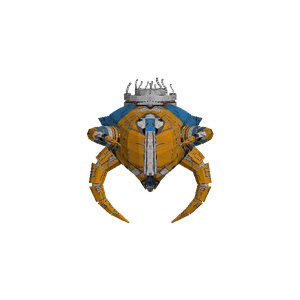
A weekly damage-race against a raid boss with more HP than you will ever remove. Fifty players per group, one 6-minute fight per attempt, seven tiers of promotion — and build choices that change how much damage you sustain. Here is the whole machine, from the config tables.
The Titan Challenge (internally world_boss, entrance unlocked at player level 32) is Wing Fighter's ranked boss-rush season. You never kill the Titan — its HP table tops out at 62.5 quadrillion — you just deal as much damage as you can inside a fixed timer, and your cumulative damage for the week is ranked inside a 50-player group of your tier.
The three Titans
The game ships three Titan bosses, rotated by the server between rounds. Each is a dedicated stage with a single boss wave — same 6-minute format, different barrage patterns (Arachne's arena adds a sandstorm).
The HP ladder
The boss framework (boss_property_levels) defines 20 boss levels. The server picks the level; each step roughly ×2–5s the previous HP pool. Level 1 is already 100 million — by level 20 the bar is 62.5 quadrillion. This is why the mode is a damage race, not a kill attempt.
Anatomy of one attempt
Every attack costs 5 Energy + Stargate Challenge Tickets (tickets reset daily and do not carry over; the per-day allowance is a server value). The fight itself is two phases:
Phase 1 · 60sNormal bullet-hell. Move to avoid the barrage and preserve HP. Skill-based dodge triggers require a successful dodge proc, not just moving clear of a projectile.
Phase 2 · 300s "Frenzy State"The Titan unleashes an undodgeable full-screen barrage until the countdown ends. You cannot avoid this damage — you out-heal and out-tank it. Dying costs DPS uptime, so survivability is throughput.
The in-game "Frenzy State: {timer}" banner is this phase-2 countdown (titan_challenge_time2 = 300). Each completed run also feeds ~95 Battle-Pass EXP (battlepass_Titan_convert_exp).
The season structure
A season is 12 rounds × 7 days = 84 days (the Titan Shop resets on the same 84-day clock). Active players are auto-enrolled each round:
DAY 100:00 UTC+8 — players are bucketed into 50-player groups by tier. Bronze → Legend, seven tiers.
DAY 1–7A fixed number of attacks per day. Total damage accumulates for the round — every attempt counts, there is no "best run only".
DAY 723:00 UTC+8 — a 1-hour final tally. The Titan can't be challenged; a run that ends inside the tally window scores zero.
RESETRankings promote/demote you, ranking rewards arrive by mail, next round begins. Deal 0 damage and you're unranked, unrewarded, and demoted one tier.
The last round of a season pays ranking rewards only — no tier rewards. Reaching Silver+ each season also pays a one-time tier reward (table right).
Tiers, promotion & season tier rewards
What it pays
Three separate faucets: an attempt-damage reward tier, a weekly ranking payout inside your 50-player group, and the one-time season tier rewards above. Attempt tiers pay Stars + Honor; rankings pay Stars + Titan Coins (the Titan Shop currency, an unnamed item in the loc table — item #67).
Weekly ranking rewards (per tier)
Damage reward tiers (per attempt)
Build for damage you can sustain
Start with the featured transformation, match your gems to the Titan, then choose a deployed Mech Spirit and a coherent drone team. Compare the damage you actually finish with: a higher Combat Power number does not tell you which build wins this fight.
Finish the timer. Record how many seconds you can keep attacking. If Frenzy ends your run early, improve survival before sacrificing it for another small offensive stat.
Read this round's weakness clue. Equip the featured five-piece set and check that its damage bonus is activated. Use the percentage shown for the current round; the results screen reads an active stage buff rather than a fixed multiplier written into this guide.
Improve the damage channel you already use. Weapon gems help their own weapon; burn enhancements need burn damage; drone skill bonuses do not automatically boost every fighter shot.
Test the change against the same Titan. Keep gear, draft choices and survival time as similar as possible. Change one part of the build and compare completed damage across more than one attempt.
How to read this guide: named stats and skill conditions below come from the extracted client. Build priorities are recommendations based on those effects. Worked examples state their assumptions; the client tables do not reveal a complete, verified formula for the final score.
Match the enemy category first
Titan
Confirmed categories
Support gems to use
Positioning to test
Atlas
Aerial + Boss
Enhancement and Anti-Air
Keep concentrated weapon fire on the body. Move as little as survival allows so missiles and drone skills connect.
Arachne
Ground/Sea + Boss
Enhancement and Anti-Land
Test a position where piercing shots or explosions cover several visible parts. More part records do not prove more credited damage.
Kraken
Ground/Sea + Boss
Enhancement and Anti-Land
Keep your strongest attacks on an exposed target; use the actual encounter to assess travel time and missed shots.
Source: batch_factory 301001–301003. These are target categories, not elemental weaknesses. Local part definitions do not establish resistance values, independent burn stacks or server score credit.
Use the featured set without losing more damage than it adds
The five-piece sets include the fighter, maingun, winggun, missile and armor. Their skills give +15% weapon attack at three pieces and +30% transformation attack. These affect attack terms; treating them as ×1.15 ×1.30 on all final damage is not justified.
Check the activated set bonus in the current game. An older clue describes 150% damage when transformed, but the shipped results-screen code checks a matching set and displays the attempt's damage with ×(1 + the active stage-buff bonus). Its text says “Equip 5” pieces and marks the bonus activated or unactivated. This is stronger evidence for the displayed result than assuming a permanent ×1.5, or discounting that bonus by transformation time.
The transformation skills separately list a 20-second duration and 120-second cooldown for all five sets. That timing matters to the transformation's attacks and +30% attack effect; it does not establish the uptime rule for the featured-set score bonus. The native battle and server calculation are not fully exposed here.
Conditional gear-swap example: if the current activated bonus is ×1.5 on the score you are comparing, a featured setup needs at least 66.7% of the other build's unboosted damage to break even, because 0.667 × 1.5 ≈ 1. Measure the gear downgrade and use the game's actual active bonus before changing sets.
Show the five transformation sets and their bonuses
Gems: match the weapon and the Titan
Use weapon gems for your strongest damage line, Enhancement for every Titan, and the appropriate Anti-Air or Anti-Land gems. Keep HP or Defense gems if they let you survive longer. The attack bonuses are flat attack, not percentages.
Practical setup: use the Attack Cabin's four sockets for the weapon lines doing the most work in your build. In the four Support sockets, favor your best Enhancement gems and the matching branch gems; an equally strong Anti-Land gem has no matching attack category against Atlas. In the four Defense sockets, compare HP and Defense by the extra attacking time they buy. Dodge is a weaker first choice for the five-minute undodgeable Frenzy phase.
Gem upgrades, cabin thresholds and a worked attack calculation
The flat attack ladder is 30 / 60 / 120 / 210 / 330 / 480 / 690 / 1,280 / 2,560 at 1★–9★. A 9★ Maingun Gem therefore contributes 2,560 to the maingun's gem-attack term; upgrading 8★ to 9★ adds 1,280, not another 2,560.
Cabin bonuses are keyed to the combined stars of each socket pair, at 4, 8 and 12. Attack pairs list +60 / +150 / +270 total attack at those thresholds. Support pairs list category-specific reduction bonuses, so their extra Combat Power is not extra damage. Keep useful sockets filled and check the pair bonus before fusing away an equipped gem. See the complete gem and cabin tables.
Weapon-gem attack gainΔ weapon ATK = Δ gem ATK × (1 + total ATK% + that weapon's ATK%)
This is the change in the power_calculation.attr_algorithm weapon-attack formula with other inputs held fixed. With +30% total attack and +20% weapon attack, a new +2,560 Maingun Gem adds 2,560 × 1.5 = 3,840 maingun attack. On a 50,000-attack maingun that is +7.68% attack. If that weapon contributes 60% of your damage and its damage scales linearly with this attack change, the estimated whole-run gain is 60% × 7.68% = 4.61%.
Support gems write separate attack-against-category stats. They are not in this weapon-gem equation. Their exact downstream combination with weapon attack needs the combat implementation; do not automatically add them to all three displayed weapon values.
Mech Spirits: choose the skill your build can use
Deploy the Spirit whose battle skill you want. Owning and leveling Spirits grants collection attributes even while they are undeployed; their battle skills trigger when deployed. The picks below are alternatives for your available deployment slots, not an automatic stack of every owned skill.
These are the 45 Mech Spirits in the collection, including Fireball and Dragon Emperor. They are separate from the four Commanders, such as Catherine and Alice. Compare your current skill levels: a new high-rarity Spirit does not necessarily beat a developed lower-rarity one.
Your situation
Start with
Why / when to change
Building a reliable boss setup
Fireball or Crimson Shadow
Fireball gives boss damage +7.5% → +24.3%; Crimson Shadow gives general damage +7% → +25%. Both last the battle and need no crit, dodge or three-drone trigger. Compare actual skill level and score.
Titan stays above 60% HP
Dragon Emperor
+11% → +77% damage while the target is above 60% HP. A strong high-investment choice for a large HP pool; check the condition against the encounter rather than assuming permanent uptime.
Weapon hits are a large share; crit is low
Obsidian
+5 → +19.4 percentage points of crit rate. More effective crits help both ordinary weapon damage and crit-triggered effects. Benefits shrink if you are already at effective crit saturation.
Weapon hits already crit reliably
Toad Lord or Venom Scorpion
Toad Lord checks the first eligible attack every 2 seconds and builds up to eight crit-damage stacks. Venom Scorpion starts with +15 → +51 percentage points of crit damage and needs no ramp. Crit damage is not an equal percentage increase to total DPS.
Running three burn drones
Star Envoy; compare Magic Armor or Stargazer
Star Envoy needs all three Burn Drones and enough burning enhancement over the target's decrease to proc. Magic Armor ramps burning enhancement every 2 seconds; Stargazer supplies a smaller immediate increase. A burn-specialist slot pays only when burning is a meaningful damage share.
Running three electric drones
Octopus; compare Cheetah or Pudding
Octopus offers a conditional cooldown ramp; Cheetah adds a conditional extra hit. Both require three Electric Drones and positive electric-enhancement advantage. Pudding's electric enhancement lasts the whole battle.
Dying before the countdown ends
Berserk Dragon or Aqua Spirit
Berserk Dragon gives 10% → 34% final damage decrease from battle start. Aqua Spirit gives 35% after its first HP-threshold trigger; leveling it raises the trigger from below 30% to below 96% HP. Test whether the saved seconds outweigh the offensive slot.
Check the trigger before spending shards
Do not bring PvP-only healing for this fight. Blood Bat, Dark Crow, Spike and Ladybug explicitly restrict their healing skills to PvP. Salamander's HP skill is also PvP-only.
Flame Stinger needs the target below 35% HP. It contributes no skill bonus while the Titan remains above that threshold. Dragon Emperor is the relevant high-HP counterpart.
Phantom Dog needs an actual dodge proc. Moving out of a projectile's path is not evidence that its skill triggered. If three stacks are earned, its damage and healing bonuses persist; do not budget guaranteed Frenzy stacks. Howler also relies on dodge triggers.
Tyrant is a 15-second opening buff. That is only 4.17% of a 360-second run. At max skill, 68% electric enhancement for 15 seconds averages 2.83 percentage points over the full timer under uniform output; this is an average stat contribution, not +2.83% final damage.
Do not turn descriptions into impossible totals. Octopus lists three cooldown stacks, but multiplying its maximum 42.5% by three does not prove a negative cooldown. The engine's stacking rule and minimum interval are not established here.
Read exact skill levels, ramp conditions and caps for the recommended Spirits
First skill level → final skill level (Spirit Lv.60). Every five Spirit levels upgrades the skill. Values come directly from the skill rows; the condition still applies at maximum investment.
Useful ceilings: Magic Armor's three stacks total +19.2 → +69.6 percentage points of burning enhancement. Toad Lord's eight successful triggers total +60 → +204 percentage points of crit damage. Star Envoy has up to five burn-damage-boost stacks, but its trigger chance and three-drone requirement control how quickly it reaches them.
Dragon Emperor and Crimson Shadow both write dmgInc#fleet; Fireball writes dmgInc#unitBranch3. Names on different rewards do not prove separate multiplicative damage buckets. See the Spirit collection and upgrade costs.
Drones: two teams worth comparing
At similar investment, test Sagittarius + Lyra + Fornax for a sustained burn build, or Draco + Orion + Aquila if your electric drones and Spirits are stronger. The config supports both synergies; it does not establish a universal damage ranking.
Burn team: damage over time and repeated skills
All three are Burn Drones, enabling Star Envoy's three-drone condition. Their base skill cooldowns are 3 seconds. Sagittarius provides the burn amplification, Lyra adds damage based on burning stacks, and Fornax supplies a persistent cooldown benefit. Keep the target in reach so applications refresh instead of expiring during movement or downtime.
Burn math: the six-stack ceiling is not a measured DPS result
Configured burn coefficient70% per second × 6 stacks = 420% per second at full stacks
The burn buff has a 1-second tick, 5-second duration and six-stack limit. The 420% figure is the tick coefficient at the cap, relative to the attack basis used by that damage event. It is not 420% of your entire loadout's displayed attack and it does not include startup time, expired stacks, hit failures or mitigation.
Sagittarius also applies a separate Flaming status: +25% burning damage per stack, at most six stacks, lasting 5 seconds. Its +150% ceiling requires maintaining those stacks. The tables alone do not prove that three drones instantly reach six stacks, that every Arachne part keeps independent stacks, or how damage ownership changes when different drones refresh the same burn.
At full observed stacks, additional applications mainly help maintain uptime; they do not raise the six-stack cap. Faster skills still add direct hits, and Star Envoy triggers on every third Burn Drone skill, so a cooldown effect can remain useful after the burn cap.
Electric team: repeated bursts and crit support
With all three Electric Drones, Octopus and Cheetah can use their three-drone triggers. Draco's shock stacks raise its own skill damage, Orion supports electric drone damage, and Aquila supports electric crits. This team deserves a direct comparison when it is better leveled or has stronger recast passives than your burn roster.
Aquila translation correction: the English skill text says “25% electric damage,” but the linked buff writes +25 percentage points of electric crit chance and +50 percentage points of electric crit damage. Those are the effects used in this guide.
When you cannot assemble either trio
Keep three developed drones deployed for their attack contribution, then move toward a matching team as your roster improves. Lich, Cerberus and Scorpion lion are lower-rarity Burn Drones; Cyclops, Hydra and Harpy are lower-rarity Electric Drones. The Spirit conditions check drone type, not these particular names. Replacing a highly developed drone with a weak one just to activate a conditional Spirit can cost more attack than the synergy gains.
Reflect is not the default Titan damage plan. Pavo, Apus and Grus describe reflecting enemy drone skill damage; a Titan barrage is not automatically that trigger. Apus's HP and Grus's defense effects may still help survival, but compare completed damage and remember that mixing drone types disables three-of-one-type Spirit conditions.
Why drone levels help weapons, and which recast effects to compare
The attack formula adds the sum of the three deployed drones' scaled attack to each of maingun, winggun and missile, with a coefficient of 1 for each. The ultimate's coefficient is 0 in drone_conf.atk_ratios. This is an attack contribution to three channels, not a promise of triple final damage.
Contribution to each ordinary weaponΣ [drone base ATK × (1 + individual drone ATK% + shared drone ATK%)]
For example, drones with final contributions of 10,000, 12,000 and 8,000 add 30,000 attack to each of the three weapon lines. Raising one drone's contribution by 1,000 adds 1,000 to each line. The main formula's global weapon-attack multiplier does not multiply this separate drone term again.
Shown values are the highest listed recast grade at skill level 7. Use the effects your drone actually has. Burning Boost boosts drone burning damage; Skill Boost boosts drone skill damage; Overload Strike boosts drone damage against bosses. Their scope is not the whole loadout. PvE normal-attack effects such as Explosive Shell or Armor Piercer can matter when shots connect, but need a hit-coverage comparison rather than a raw percentage ranking.
Fornax and recast cooldown text are backed by interval-rate attributes. Without the runtime conversion and caps, “10% cooldown” should not be blindly entered as a 2.7-second interval or multiplied with every other cooldown source.
Calculate whether the change is worth it
Separate attack, critical-hit expectation and time spent dealing damage. These calculations compare controlled scenarios; they cannot predict an absolute Titan score from Combat Power.
Working comparison modelTotal damage ≈ average landed damage per second × seconds attacking
Average landed DPS includes hit rate, skill frequency, crits, burn uptime and transformation effects. Combat Power uses separate weights: the attack entries contribute maingun × 4, winggun × 3 and missile × 3 to that rating. These are rating weights, not projectile multipliers.
Does more survival beat more DPS?
Enter measured attacking time for your old and new setups. The default example sacrifices 10% of active DPS to extend a run from 300 to 360 seconds, yielding 8% more total damage.
Assumes steady average DPS while attacking and an unchanged featured-set bonus, target and damage conditions. Longer survival can also change ramp effects; use a measured whole-run comparison to confirm.
Crit rate or crit damage? Work through both upgrades
Expected damage of an eligible hitCrit factor = 1 + effective crit chance × (crit-hit multiplier − 1)
Use effective crit chance after the target's resistance and an actual crit-hit multiplier. For this illustrative example, assume 30% effective crit chance and a crit that deals 2× a normal hit: the factor is 1.30.
Max Obsidian: if all +19.4 percentage points increase effective chance, it becomes 49.4%. The factor becomes 1.494, a 14.92% increase over 1.30.
Max Venom Scorpion: if +51 percentage points increase the crit multiplier from 2.00 to 2.51, the factor becomes 1 + 0.30 × 1.51 = 1.453, a 11.77% increase.
At 80% effective crit chance: the same crit-damage addition changes 1.80 to 2.208, a 22.67% increase. Crit damage becomes more valuable when crits are already reliable.
These percentages apply to the affected crit-eligible damage, not every damage channel. If only 60% of your original total is affected, multiply the channel's relative gain by 60% for a first estimate. Burn crits have a separate conversion skill on Evil Eye; do not assume ordinary weapon crit rules automatically apply to every burn tick.
Why “+25% damage” may give less than 25% more score
If a verified damage bucket combines bonuses additively, its relative gain is (1 + old bonus + added bonus) / (1 + old bonus). For example, adding 25 percentage points to an existing +50% bucket gives 1.75 / 1.50 = 16.67% more damage in that bucket. This is a conditional arithmetic example, not a declaration that every Titan bonus shares this rule.
The extracted attributes distinguish general damage, boss-category damage, weapon attack, drone skill damage and burn enhancement. They do not prove that every listed reward multiplies independently. In particular, do not calculate a score by multiplying Fireball, Legion boss tech, camp tech, drone recasts and all owned Spirits together.
Turn the build into a better attempt
Before and during the run
Before launch: check the current clue, featured gear, Support Cabin categories, deployed Spirit and all three drone types. Save the loadout and starting stats for a fair comparison.
First minute: preserve HP while keeping weapons on target. Let timed buffs ramp; check visible stacks if your plan depends on them. Dodging manually preserves HP but does not by itself prove a dodge-triggered skill proc.
Weapon choices: take upgrades that improve your main damage line or solve a survival problem. Judge spread and piercing by shots that actually connect with this Titan, not by screen coverage alone.
Frenzy: maintain target contact and transformation attack time. If you die early, test a defensive gem or Spirit and compare the extra attacking seconds with the DPS you lose.
After the run: record total damage, time attacking, transformation coverage and relevant stacks. Compare several like-for-like runs; a different boss, draft or missed attack can overwhelm a small stat change.
Where permanent progress helps
Drone levels and stars raise an attack term in all three ordinary weapons. Weapon upgrades and matched gems strengthen the line you use most. Boss and matching branch technologies have applicable targets here, but their Combat Power gain does not measure your actual DPS gain.
Spirit collection attributes and combinations stay valuable even if you deploy a different skill. Spend skill-focused shards on a Spirit you can actually trigger; check its next five-level skill breakpoint before making a long investment.
The three Pilots below gain lasting bonuses through Titan participation. Their values are long-term progression targets, not a guarantee that their stats improve every damage event:
Every attempt matters: round damage is cumulative and unused daily tickets do not carry over. Finish before the final tally window. A consistent complete attempt can be worth more than an untested upgrade that costs you a run.
Evidence, limits and reproducible source tables
The guide uses the extracted local client config, checked against the refreshed bundle. Confirmed: Titan target categories, gem attributes, weapon attack formulas, Spirit deployment rules, skill descriptions and buff triggers, drone types, recast scope, burn duration and stack limits.
Not established by these tables: the complete final-damage pipeline; the featured-set buff’s native/server calculation; score credit per boss part; whether Arachne's parts independently retain burns; universal absence of resistance; emitter hit rates; actual burn ownership on refresh; or cooldown stacking and minimum intervals. Arachne's multiple local part rows are not evidence for a guaranteed ×14 damage multiplier.
Sources: gem_def, gem_group_def, power_calculation, intelligence_main, intelligence_level, skill, battle_buff, drone_base, drone_skill, drone_conf, batch_factory, equip_suit, fighter_extra_skill, function_unlock, condition and English localization, plus decoded TitanChallengeResultView and WorldBossRewardConfig Lua. The extracted build-guide data includes skill IDs and the attack formula for inspection.
The Titan Shop
Paid in Titan Coins from rankings and tier rewards; stock resets every 84 days — one full season, so budget across the whole season, not per week. The big-ticket items are Pilot Training Guides and Mech Spirit shards (including the exact spirits that boost this mode). Entries the game can't resolve are server-rotated chests.
The Transformers twin: Resist Unicron
The collab event Resist Unicron (internally emperor / boss_combat) is the same machine re-skinned: 50-player groups, weakness parameter, damage milestones — but a 5-tier ladder (Warrior → Pinnacle) paying Cybertron Medals and Leader Tokens, with the "Lord of Cybertron" avatar frame at the top. If you learn the Titan Challenge, you already know how to play it.
// Unicron
Fair-play enforcement
The server sanity-checks scores: the config carries a damage_checking threshold of 1013, damage submitted during the tally window is voided (error 9005), and confirmed manipulation voids the whole round's damage:
"Due to your cheating behavior during Titan Challenge, this damage is invalid. Your damage dealt in this round … has also been annulled. The use of accelerators, plug-ins, or third-party tools to manipulate game data is strictly prohibited."
// mail_detail_titan_cheat
Sources: world_boss_rank/reward/damage_reward, boss_property_levels, titian_shop (the typo is the developer's), equip_suit, game_base_config, intelligence_*, aviator_base, and the English localization table. Attempt counts per day and the weekly weakness rotation are server-side values not shipped in the game.